







Search Results for: gold rush

167 Years Later, Coffee Beans See the Light of Day Again: Archaeological Discovery Confirms Melbourne's Status as the Coffee Capital
Starbucks conquers cities across the globe, yet it suffered a Waterloo in Australia, and behind this lies Australia's own distinct coffee culture. Sydney and Melbourne have long vied for the title of "coffee capital," and an archaeological discovery has added strong evidence for Melbourne—archaeologists excavating a grocery store site at Melbourne's Metro Tunnel have unearthed coffee beans perfectly preserved from 167 years ago. This discovery traces Melbourne's coffee culture back to before the gold rush, rewriting our understanding of Australia's café era. This article will walk you through the details of this archaeological find, revisit the long history of Melbourne's coffee culture, and let you feel the profound global influence of Australian coffee. [more…]

Major brands are rushing into the coffee arena. Is this a new market opportunity or just a fleeting internet-famous fad?
In recent years, the coffee market has continued to expand, yet competitive pressure within the industry has also intensified. As the number of coffee shops surges, well-known companies such as Sinopec, Huawei, China Post, and Li-Ning have all made cross-industry forays into the coffee business, and the Weizhi Group behind Gold Roast cereal has also increased its investment. Some see this as a reflection of consumption upgrading, while others worry that a stampede of big brands into cross-industry ventures will ultimately end in a mess. Is cross-industry coffee a rational choice that follows market logic, or merely short-term marketing sustained by novelty alone? This article analyzes market data, brand advantages, and industry barriers to explore whether cross-industry coffee can shake off the label of "short-lived internet celebrity." [more…]

Starbucks member night events offer uneven experiences, with Gold and Diamond users complaining about big gaps in store execution.
Starbucks recently launched a Happy Holiday Member Night event for Gold and Diamond members, allowing eligible users to book free in-store participation through the official App. However, after the event ended, a large number of feedback posts appeared on social platforms, with many members calling the experience extremely poor: the new product tasting consisted of only one mini drink, limited-edition badges were in short supply, the coffee lecture and interactive games were simply canceled, and there were no discounts on merchandise purchases either. Some participants also pointed out that the quality of the event varied by store, and stores that attached greater importance to it still delivered a decent holiday experience. Starbucks employees, meanwhile, revealed that rushed preparation, insufficient bookings, and last-minute situations could all dilute the effectiveness of the event. Why did this member event receive such polarized reviews? This article will sort through feedback from all sides and the reasons behind it. [more…]
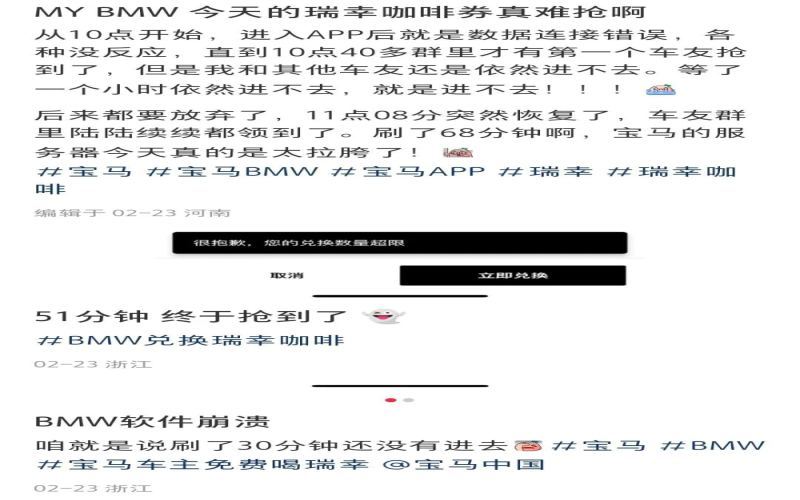
BMW Silver Card members scramble for Luckin free coffee vouchers, BMW APP overwhelmed and crashes
Recently, many BMW owners have been complaining on social media that the BMW APP freezes or even crashes, and the culprit turns out to be the rush for free Luckin Coffee vouchers. It turns out that any Silver Card member verified on the BMW APP can claim one free Luckin coffee voucher every month, while Black Card and Gold Card members can get two. As the number of vouchers is limited, owners faithfully wait for member week, overwhelming the system. Some have compiled detailed guides, others have shared screenshots of their hour-long voucher-grabbing attempts, even joking that they want to "drink back the money they spent on the BMW." This voucher-grabbing frenzy not only reflects the appeal of brand collaborations, but also makes one sigh: so even luxury car owners will race to click for a cup of coffee worth just a dozen yuan. [more…]
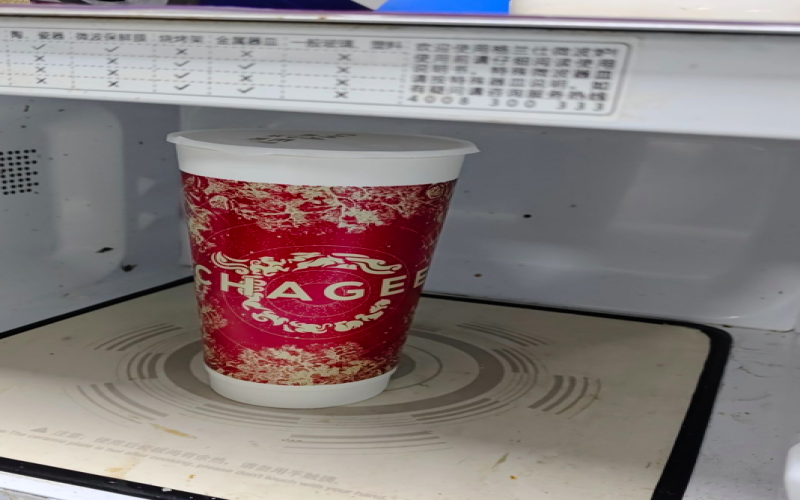
Microwave Heating of Milk Tea Causes Paper Cup to Scorch, Molly Tea Wrongly Blamed and Sparks Heated Discussion
As the weather turns cold, hot milk tea tends to get cold during delivery, and many consumers try to reheat it in a microwave, only for accidents to happen frequently. Recently, multiple customers have reported that when heating Jasmine Naibai drinks, the paper cups showed burn marks and even nearly caused a fire. In contrast, heating milk tea from brands such as Bawang Chaji, Mixue Bingcheng, and Nayuki did not cause similar problems, raising questions about the quality of Jasmine Naibai's paper cups. However, onlookers rushed to defend the brand, pointing out that the cup sticker already has a reminder, and that the metallic substances in the cup's gold-stamped pattern reflect microwaves in the microwave, which is the main cause of the accidents. This article reviews the course of the incident and the underlying principles, and reminds readers: heating milk tea in a microwave poses safety hazards, so do not imitate it rashly. [more…]
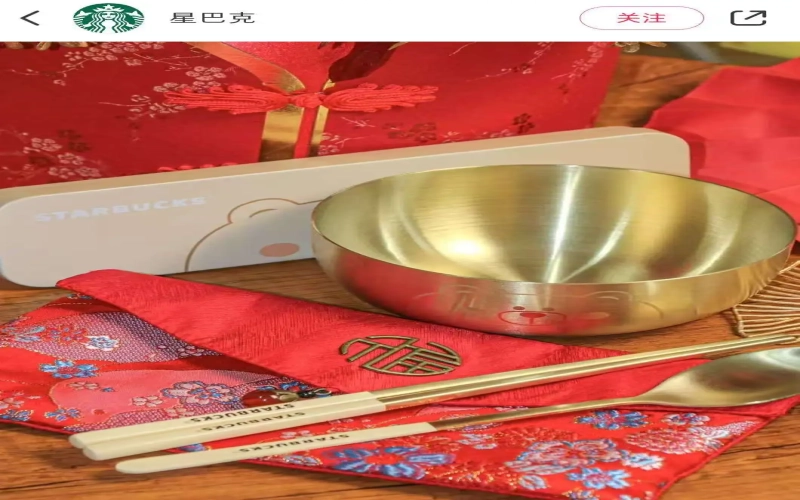
Starbucks Limited Edition Gold Bowl Sparks Buying Frenzy: Stainless Steel but Limited to 45°C, Netizens Joke It Can Only Be Used for Begging Ice Americanos
Starbucks partnered with Ele.me to launch the "Special Delivery" "Fortune Bowl" holiday set. During the promotion, customers who order designated two-cup drinks or add 39.9 yuan can snap up the co-branded golden rice bowl. Although this food-grade stainless steel merchandise comes with an anti-scald bowl sleeve and heat-insulating bowl mat, the bottom is labeled "suitable temperature <45°C," creating a contrast with its original purpose of holding hot food and prompting netizens to joke that "for alms, you can only beg for iced Americanos." Since each store has only one in stock, the rush to buy created a tense atmosphere. Some people got one easily, while others encountered problems such as failed add-to-cart attempts, canceled orders, or even sudden price changes. Starbucks explained this as a system bug. [more…]

Gesha Village Estate Gesha Bean Grading: A Detailed Explanation of Auction, Gold, Red, Green, and Chaka Lots
Ethiopia's Gesha Village is one of the few estates dedicated to growing Gesha on a large scale, and its product line is divided into five grades: Auction, Gold, Red, Green, and Chaka. This article provides a detailed analysis of the flavor characteristics, production proportions, and cupping performance of each grade, and also includes Front Street Coffee's roasting and brewing parameters for each batch of Gesha, helping coffee enthusiasts gain a comprehensive understanding of Gesha Village's grading system and purchasing direction. [more…]
Gesha Village Estate Gesha Bean Grading Explained: Differences Between Auction, Gold, Red, Green, and Chaka Lots
Ethiopia's Gesha Village is the only estate that cultivates Geisha on a large scale exclusively, and its product line, modeled after Hacienda La Esmeralda, is divided into five grades: Auction, Gold, Red, Green, and Chaka. This article will analyze each grade one by one in terms of its definition, share of production, cupping performance, and flavor characteristics, and will also include Front Street Coffee's actual cupping records and brewing parameters for each grade, helping coffee lovers gain a comprehensive understanding of Gesha Village's grading system and how to choose. [more…]
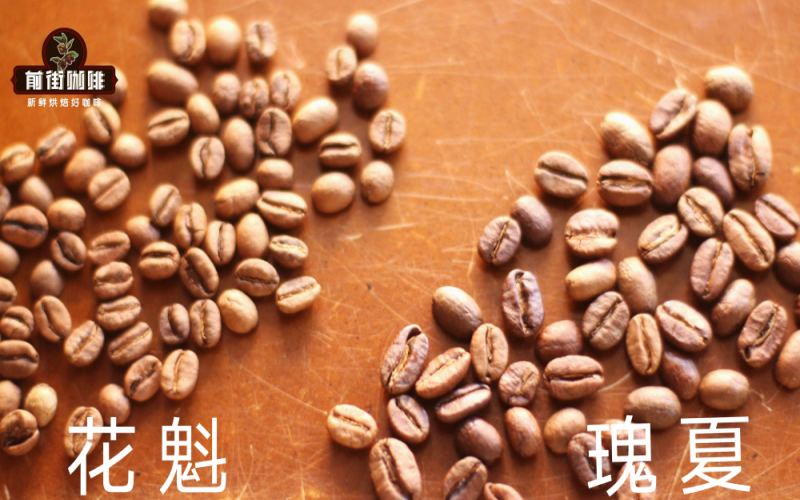
A Complete Guide to the Geisha Coffee Variety: From Its Ethiopian Origins to the Grading and Flavor of Panama's Hacienda La Esmeralda
Geisha is a highly sought-after variety in the Arabica family, journeying from the forests of Ethiopia to the world stage and shining brilliantly at Hacienda La Esmeralda in Panama. This article systematically traces Geisha's discovery and spread, explains in detail Hacienda La Esmeralda's Red, Green, and Blue Label grading system and flavor differences, and clarifies the distinction between Ethiopia's Gesha Village and Panama Geisha. It also introduces the characteristics of Gesha Village's auction, Gold, Red, Green, and Chaka lots, as well as Front Street Coffee's Geisha product recommendations and brewing parameter suggestions, helping coffee lovers gain a comprehensive understanding of this elegant variety. [more…]
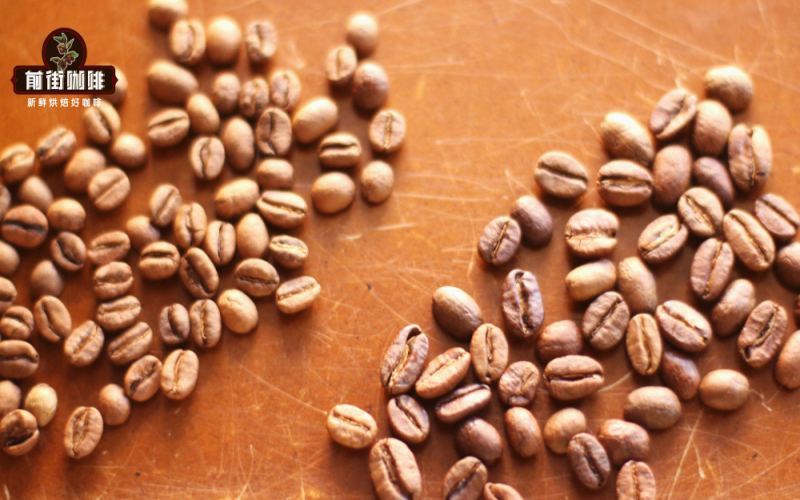
Sidamo Huakui and Panama Geisha: An In-Depth Interpretation from Naming Origins to Flavor Differences
Huakui and Geisha—one is a star among Ethiopian natural beans, the other a legendary variety that emerged from Panama. The two are often compared, and at one point a saying even circulated that "Huakui is top-tier Geisha." Where did this misunderstanding come from? And what story lies behind the two names "Geisha" and "瑰夏"? Front Street Coffee will walk you through variety origins, naming systems, and grading, all the way to flavor expression, to help you sort out the distinct threads of Huakui and Geisha. The article also explains the meanings of "label" Geishas such as Hacienda La Esmeralda Red Label and Geisha Village Gold Label, as well as the origin of Huakui version numbers, helping coffee lovers avoid confusion when ordering and shopping. [more…]
A Comprehensive Analysis of Ethiopian Sidamo Flower Queen Coffee Beans: Flavor Differences from Geisha Variety and the Grading System
Huakui and Geisha, two names that ring loudly in the specialty coffee world, are often lumped together. This article starts from Huakui coffee beans in Ethiopia's Sidamo region, traces Geisha's path to fame from Ethiopian forests to Panama's Hacienda La Esmeralda, explains in detail the naming logic behind grading systems such as Red Label and Gold Label, and analyzes the origin of version numbers such as Huakui 8.0. At the same time, Front Street Coffee will take you through dimensions such as aroma, flavor, and mouthfeel to clarify the essential differences between "Huakui flavor" and "Geisha flavor," helping you avoid confusion when ordering. [more…]

How Are the Gold Cup Extraction Yield and Strength Calculated for Pour-Over Coffee? Recommended Coffee-to-Water Ratios and an Analysis of the Evolution of SCA Standards
Many coffee enthusiasts have heard of the Golden Cup extraction theory: ideal concentration 1.15%-1.35%, ideal extraction yield 18%-22%. But this standard actually comes from the SCAA, not the SCA; the European and American coffee associations each have their own positions on ideal concentration. After the SCAA and SCAE merged in 2017, the UC Davis Coffee Center made slight adjustments to the old brewing control chart, loosening the upper concentration limit and the brew ratio range. This article will start with the history of the Golden Cup theory, sort out the differences between the old and new control charts, explain why high concentration with low extraction can highlight acidity while low concentration with high extraction can bring out floral and chocolate notes, and, combined with product information from Front Street Coffee, help you understand how concentration and extraction yield should be judged together, rather than fixating on a single number. [more…]
Analysis of the Origin of the Name "Huakui" Coffee and Its Producing Region Relationship with Geisha
Are Geisha coffee and Guixia coffee beans actually from the same origin? This question sparked quite a bit of discussion in the early days when Guixia rose to fame. This article will trace Geisha's journey to fame from the forests of Ethiopia to Panama's Hacienda La Esmeralda, explain the origins of the two names "Geisha" and "Guixia," and sort out the naming logic behind grading systems such as Red Label and Gold Label. At the same time, the article will also reconstruct the complete timeline of Guixia, from winning the 2017 TOH to the year-by-year updates of its version numbers, explaining the original meaning of the word "Guixia" in Japanese geisha culture and how it was mistakenly rumored to be a top-tier Geisha. Finally, Front Street Coffee will guide you through the specific differences between Guixia flavor and Geisha flavor, and offer region recommendations for getting started with Geisha. [more…]
Are Hualkui and Geisha the same coffee? Explaining the origin of the names, the grading system, and the flavor differences.
Geisha and Huakui are often lumped together, and at one point there was even a saying that "Huakui is top-tier Geisha." In fact, the two differ clearly in variety, origin, naming logic, and flavor profile. This article, from the perspective of Front Street, traces how Geisha went from the forests of Ethiopia to becoming a Panama BOP champion, and why in China it is called both "Yiji" and "Guixia"; it also revisits how Huakui rose to fame after winning TOH in 2017, and explains the origin of version numbers like "Huakui 8.0." The article also compares representative products such as Hacienda La Esmeralda Red Label and Gesha Village Gold Label, as well as the respective flavor characteristics of "Huakui flavor" and "Geisha flavor," to help coffee lovers sort out this easily confused pair. [more…]

When Monks Pick Up Pour-Over Kettles: How Temple Coffee Went from Lingyin Temple to a Xiamen Expo
When a "monk" dressed in a long robe calmly brewed coffee with a Fellow gold kettle in hand at the Xiamen International Coffee Industry Expo, onlookers rushed to raise their phones. This scene at the Bitter Coffee booth, paired with the backdrop slogan "Fear not the ancient Buddha speaking of compassion, fear the ancient Buddha brewing coffee," quickly sparked heated discussion on social media. From Lingyin Temple in Hangzhou being mobbed at the beginning of the year to temples across the country setting up coffee bars one after another, "temple coffee" has evolved from an internet sensation into a unique coffee culture phenomenon. Cibei, Jianfo, Xide—these names carrying Zen connotations are redefining the way young people drink coffee. This article will take you through a review of this craze that has spread from Buddhist sanctuaries to coffee exhibitions. [more…]
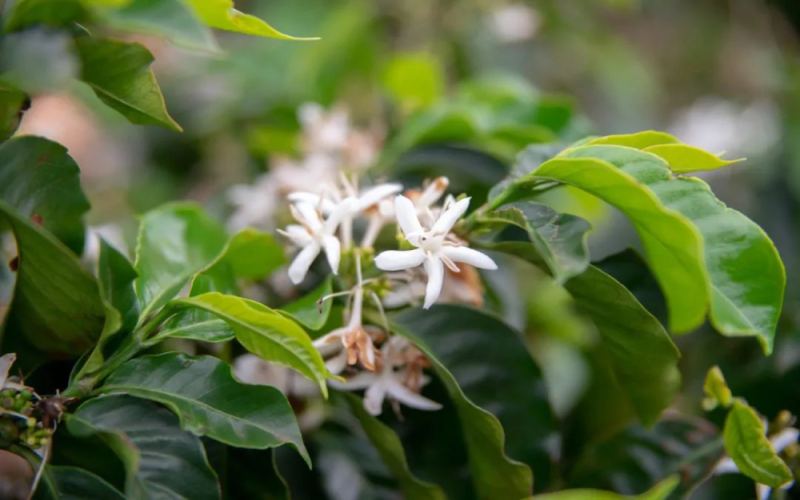
From Gesha Village to Hacienda La Esmeralda: A Detailed Comparison of Geisha Coffee Flavors from Three Countries and V60 Pour-Over Parameters
Geisha has long swept the specialty coffee world with its juice-like smooth mouthfeel and rich floral aromas, but it is not the calling card of Panama's Hacienda La Esmeralda alone. This article focuses on three Geishas sold by Front Street Coffee: Ethiopia's Gesha Village, Costa Rica's Tarrazú-based La Candelilla Estate, and Panama's Hacienda La Esmeralda, comparing them one by one from altitude, variety, and processing method to cupping and brewing performance, clarifying the differences between the Gold Label and Red Label, the stylistic divide between Gesha Village and Hacienda La Esmeralda, and including V60 three-pour pour-over parameters to help you find the Geisha that suits your taste best. [more…]
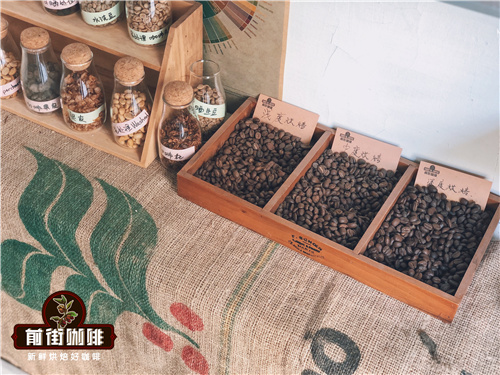
Panama Geisha | What are the characteristics of Geisha? Why is Panama Geisha so popular? How do Geisha coffees from different regions differ in flavor?
Geisha coffee has always been highly popular in the specialty coffee world for its juicy mouthfeel and intense floral aroma. You may be most familiar with the Geisha coffee from Panama's Hacienda La Esmeralda, since Hacienda La Esmeralda rose to fame thanks to Geisha coffee, and also won so many awards with Geisha coffee that it could hardly hold them all. But did you know? Because Geisha coffee [more…]

Luckin Coffee's co-branded merchandise with Havoc in Heaven sees a cold reception, postcards' value for money called into question, staff say only single digits given out per day
Luckin Coffee recently collaborated with the "Havoc in Heaven" IP to launch Olympic-themed limited-edition merchandise, but the co-branding campaign that was initially highly anticipated unexpectedly fell flat. Although many consumers frequently placed orders to collect the merchandise in the early days of the campaign, the subsequently released gold-stamped postcards failed to sustain the momentum. Staff at many locations reported that very few postcards were given out, in stark contrast to the previous week's frenzy when cup sleeves and stickers sold out. Consumers generally felt that the merchandise offered poor value for money, with nearly ten yuan of a two-cup combo going toward six pieces of paper, lacking practicality and appeal. This article will analyze in detail the reasons behind the co-branding campaign's cold reception, compare it with the earlier successful collaboration with "The Tale of Rose," and explore the timing, conditions, and human factors required for successful co-branding marketing. [more…]
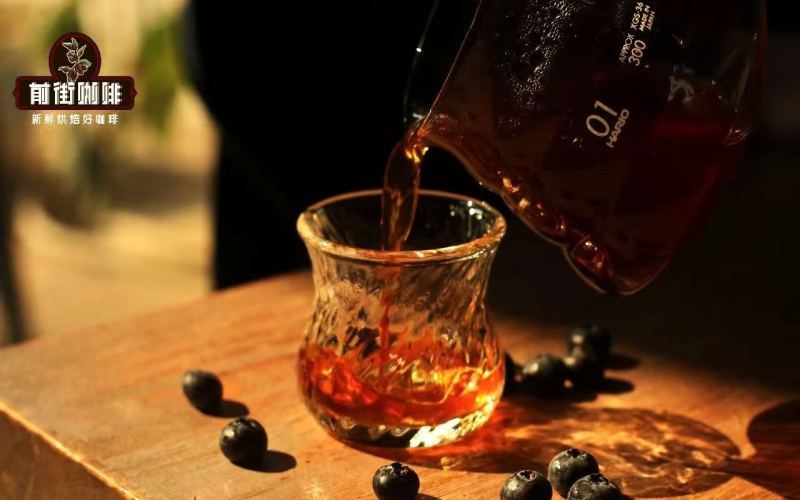
6 Ways to Drink Cold Brew Coffee, Rotate Through Them All Summer
After you've made cold brew coffee, don't rush to drink it straight—though it's already quite refreshing on its own, cold brew is actually a highly versatile base. It has low bitterness, plenty of sweetness, and clean flavors, so it pairs well with anything. With just a little effort, you can whip up an entire summer drink menu. This article rounds up 6 ways to drink cold brew, from simple [more…]
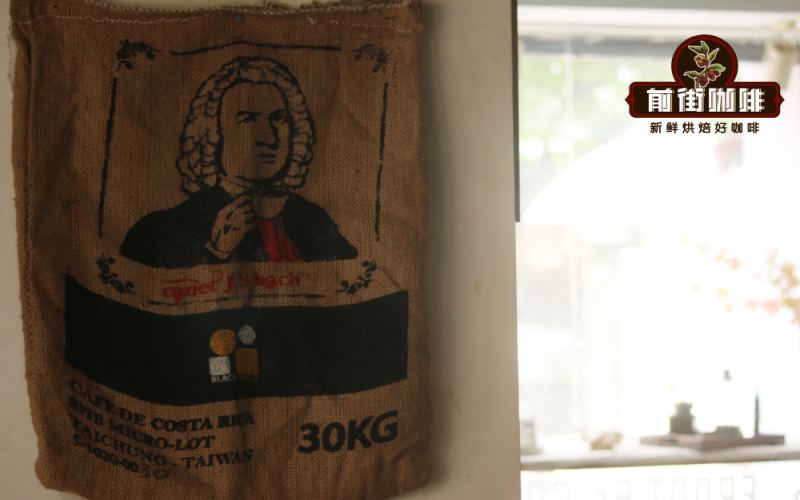
Front Street Costa Rica Mozart Coffee Beans: A Full Analysis of the Sweet-Tart Performance and Brewing Parameters Under Raisin Honey Processing
Costa Rican coffee has always been known for its sweetness, and the Musician series on Front Street Coffee's bean list is a concentrated expression of this characteristic. Among them, Mozart coffee beans have become a favorite of many coffee lovers thanks to their outstanding sweetness and fruity notes. This bean comes from the Canet processing plant at the highest altitude in the Tarrazu region, is blended from two varieties, Caturra and Catuai, and uses the raisin honey processing method, retaining more complete pectin for fermentation, thus presenting a solid mouthfeel and rich fermentation aroma. Front Street's roaster uses a medium roast to preserve its sweetness and fruity flavor. During cupping, one can perceive layered flavors such as floral notes, raisins, dried fruit, star fruit, and berries. This article will start from understanding this bean's origin background, variety characteristics, and processing method, and then move on to Front Street's cupping standards and brewing suggestions, taking you through a comprehensive understanding of the unique qualities of Front Street Mozart coffee. [more…]